
Tick sampling - Global Communication Report #28
June 8, 2026
Tick sampling - Global Communication Report #28
Dr. Jessica Pereira is a postdoc from the Universidade Federal do Rio de Janeiro, Brazil. She joined our lab this January for a collaborative study on tick metabolic pathways.
Ms. Thuntita Chantawasu (Jinny) came to Japan from Thailand this April under the Japan Veterinary Medical Association's training program for Asian veterinarians and will be staying with us for a year.
From June 5th to 7th, they attended the 33rd Seminar on the Interface Between Ticks and Tick-Borne Diseases, hosted by Dr. Nakao and Dr. Matsuno of Hokkaido University, along with Prof. Konnai. During the seminar, they also had the opportunity to experience field collection of tick samples, which was one of the event's activities.
Below, we share their thoughts and impressions of the experience.
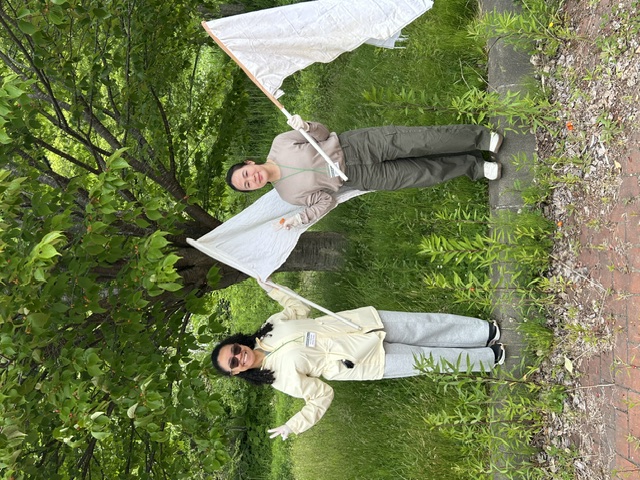
Report on Tick Sampling Event (SADI 2026)
Thuntita Chantawasu (Jinny)
Today, I had the opportunity to participate in my first tick sampling activity in the mountainous area of Kuriyama, Hokkaido. This was also my first chance to attend a seminar focusing on Acari-related diseases and tick-borne pathogens. The experience provided valuable exposure to both fieldwork and current research trends in medical and veterinary entomology.
Before field sampling event, I was introduced to several important tick species commonly discussed in Japan, including Ixodes persulcatus, Ixodes ovatus, and Haemaphysalis flava. These tick species are recognized as significant public health vectors that can transmit a variety of infectious diseases, including Tick-borne Encephalitis (TBE), Lyme disease, and other zoonotic pathogens. Preliminary identification of tick specimens based on their external morphological characteristics, including body shape, scutum patterns, mouthparts, and leg coloration were introduced.
During the field sampling activity, I also learned the standard techniques used for environmental tick collection, including the use of flagging and dragging method in vegetation-rich habitats. My professor also emphasizedpersonal safety precautions, such as wearing protective clothing, avoiding direct skin exposure, and conducting thorough body inspections after fieldwork to minimize the risk of tick bites and pathogen exposure. These practical measures highlighted the importance of occupational safety when working in environments where disease vectors are present. I was pleased to successfully collect two Ixodes ticks, which were among the target species of the sampling activity.
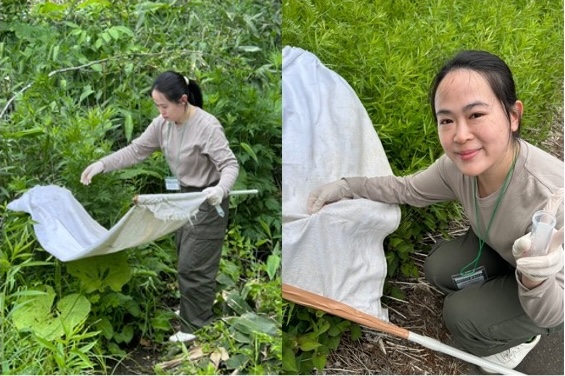
Flagging and dragging method used for tick sampling

Samples collected on a white cloth by flagging and dragging method
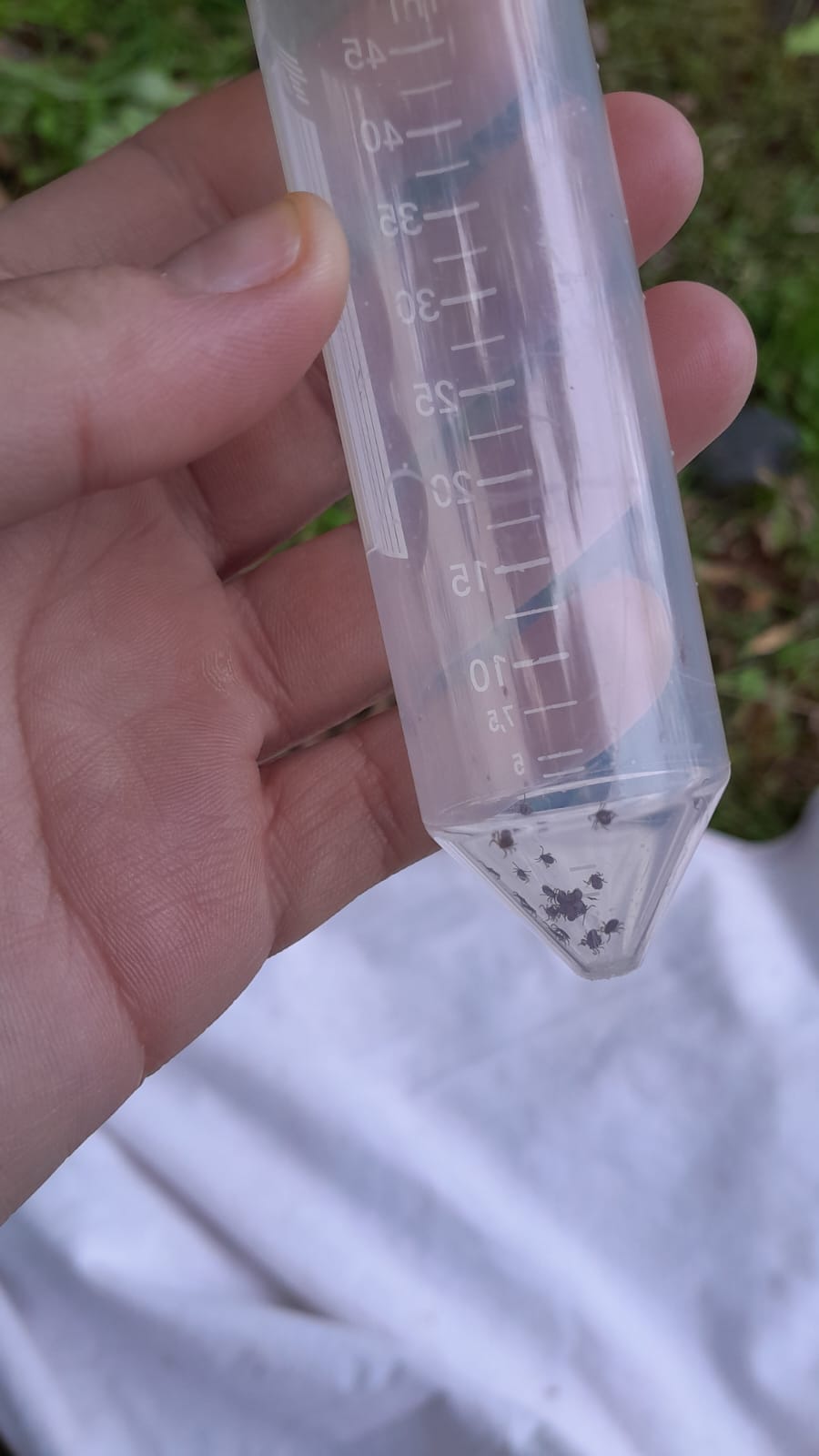
Samples collected: 2 Ixodes species out of 6 samples (to be confirmed under light microscope)
Learning about their ecology, geographical distribution, and disease transmission potential helped me better understand the importance of tick surveillance and vector-borne disease prevention.
After the field activity, I attended the seminar sessions, where I learned about important acari-associated diseases and recent advances in tick research, including the immunological interactions between ticks and their hosts, the mechanisms by which ticks modulate host immune responses, clinical manifestations of tick-borne diseases, epidemiological investigations, and emerging research on tick-associated pathogens.
In addition to the scientific knowledge gained, the seminar provided an excellent opportunity to interact with researchers, clinicians, and students working in related fields.
Overall, participating in both the tick sampling event and the Acari-Diseases seminar was an enriching academic experience. It enhanced my practical skills in vector surveillance, deepened my understanding of tick biology and tick-borne diseases, and provided valuable insights into current scientific research. The experience broadened my academic perspective and my interest in infectious disease research.
33rd Seminar on Acari-Diseases Interface (SADI 2026)
Jéssica Cristina Teixeira Pereira
The 33rd Seminar on Acari-Diseases Interface (SADI 2026) brought together researchers, students, and professionals working in acarology, epidemiology, wildlife health, and vector-borne diseases. I attended the meeting on June 6, 2026, in Kuriyama, Hokkaido, Japan, where I completed my registration and participated in the scheduled scientific and field activities. The morning program included a practical field activity focused on tick collection, conducted in a mountainous area using specific equipment and sampling approaches commonly applied in tick surveillance studies (Figure 1).
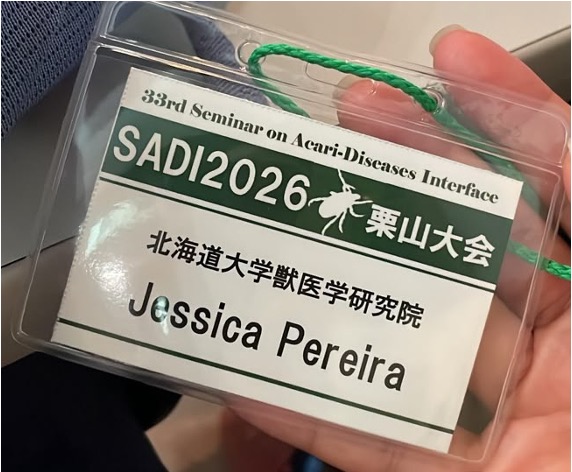
Figure 1. Participant identification badge used during the 33rd Seminar on Acari-Diseases Interface (SADI 2026), held in Kuriyama, Hokkaido, Japan.
Prior to the field activity, participants attended a lecture entitled “Stories and Interesting Facts About Ticks in Hokkaido”, presented by Mr. Takuya Ito from the Hokkaido Institute of Public Health. The lecture provided an overview of tick species commonly found in Hokkaido, their geographic distribution, morphological characteristics, and their epidemiological relevance within the region.
Particular attention was given to practical aspects of tick identification, including visual characteristics useful for distinguishing among species encountered during field surveys. The presentation also introduced the target species that participants were expected to encounter during the subsequent collection activity.
The field activity included a friendly competition among participants to see who could collect the largest number of ticks, encouraging active engagement in tick surveillance and species recognition while applying the concepts discussed during the lecture.

Figure 2. Educational material presented during the lecture preceding the field activity, illustrating tick species found in Hokkaido and morphological characteristics used for species identification in epidemiological and environmental studies. Courtesy of Dr. Takuya Ito, Hokkaido Institute of Public Health.
The primary target species during the field survey was the Taiga tick (Ixodes persulcatus), one of the most important tick species in northern Asia due to its role in the transmission of several tick-borne pathogens. Participants were encouraged to identify and collect specimens of this species throughout the field activity.
During the survey, I collected four nymphs tentatively identified as Ixodes ovatus (Figure 2). Although the weather conditions were cold, the field experience provided valuable hands-on training in tick collection, species recognition, and surveillance methodologies. The activity represented my first opportunity to participate in a field survey specifically focused on tick sampling and vector surveillance, offering practical experience that complemented my previous academic training in the biological sciences.
Following the field activity, participants returned to the conference venue for lunch before the afternoon scientific sessions. The program resumed with a lecture delivered by Konnai-Sensei entitled "Recent Advances in Tick Research.”. The presentation focused on the interactions between ticks, pathogens, and vertebrate hosts, highlighting how tick saliva and salivary gland-derived molecules contribute to pathogen transmission and immune modulation during blood feeding (Figure 3).

Figure 3. Presentation delivered by Konnai-Sensei addressing mechanisms involved in tick-borne pathogen transmission, with emphasis on the role of tick saliva and salivary gland-derived molecules in host immune modulation and vector-borne infections.
Following Konnai-sensei’s lecture, the symposium continued with presentations covering a broad range of topics related to tick ecology, wildlife reservoirs, epidemiology, and tick-borne diseases. The sessions included studies on tick infestations in wild mammals, ecological investigations of the Yezo virus in Hokkaido, clinical reports of Japanese spotted fever and Lyme disease, as well as updates on the current status of tick-borne diseases in different regions of Japan.
Additional presentations addressed the diversity and taxonomy of Japanese tick species, surveillance efforts for emerging tick-borne viruses, and alternative control strategies, including the evaluation of neem oil effects on mite eggs. Together, these presentations highlighted the multidisciplinary nature of current research on ticks and vector-borne diseases, integrating ecological, clinical, epidemiological, and molecular perspectives.
Although most presentations were delivered in Japanese, participation in the symposium provided valuable exposure to ongoing research activities in Japan and allowed me to identify major scientific topics currently being investigated in the field of tick-borne diseases.
Concluding Remarks
Participation in the 33rd Seminar on Acari-Diseases Interface (SADI 2026) provided a valuable opportunity to gain exposure to research areas that are closely related to, yet distinct from, my primary field of study. The combination of field activities, scientific lectures, and discussions with researchers working in epidemiology, wildlife health, acarology, and vector-borne diseases contributed to a broader understanding of the ecological and public health aspects associated with tick-borne pathogens.
The field survey represented my first practical experience with tick collection and species identification, allowing me to observe how surveillance activities are conducted under real environmental conditions. In addition, the scientific sessions highlighted the multidisciplinary nature of tick-borne disease research, integrating topics ranging from basic biology and host-pathogen interactions to wildlife ecology, clinical case reports, and public health surveillance.

Figure 4. Field activity performed during the tick collection survey in Kuriyama, Hokkaido. Left: participation in active tick sampling using a drag cloth technique along vegetation. Right: one of the tick specimens collected during the survey. This practical exercise provided hands-on experience in tick surveillance, specimen collection, and field methodologies applied in vector-borne disease research.
Overall, participation in SADI 2026 was an enriching academic experience that expanded my scientific perspective and provided valuable insights into current research efforts on ticks and tick-borne diseases in Japan. The opportunity to interact with researchers from different institutions and disciplines further contributed to the educational value of the event.