
Chronic diseases in animals and immune checkpoint molecules
In veterinary medicine, chronic infections and cancers pose a huge burden on animal health; however, for many cases, no effective prophylaxis or treatment is available to date. Recently, T-cell exhaustion caused by immune checkpoint molecules (which negatively regulate the immune responses) is reported as one of the immune evasion mechanisms of chronic infections and cancers.
An immune checkpoint molecule, programmed cell death 1 (PD-1), is mainly expressed on lymphocytes and suppresses the effector functions when it binds to its ligand, PD-ligand 1 (PD-L1) or PD-L2. In chronic infections and cancers, PD-1 is expressed on antigen-specific T cells and aberrant PD-L1 expression is found on infected cells or tumor cells. In this situation, T cells become “exhausted” and no longer exert cytotoxic activity against their target cells. On the other hand, the suppression caused by the PD-1/PD-L1 axis is reversible, and the blockade of this pathway can restore effector functions of T cells. Therefore, PD-1/PD-L1 inhibitors, such as anti-PD-1 antibody, can be used as novel therapeutic agents against those intractable diseases.
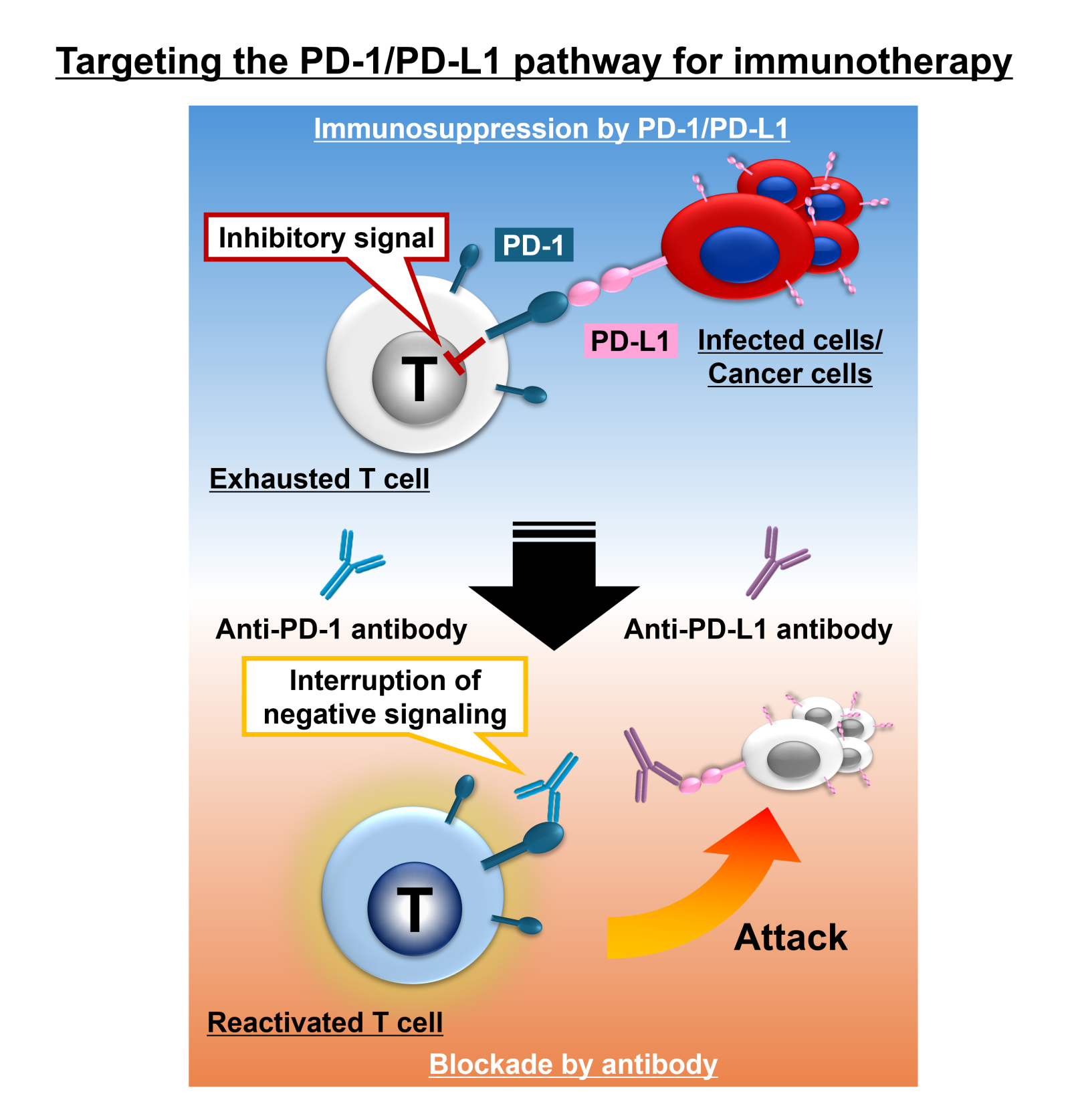
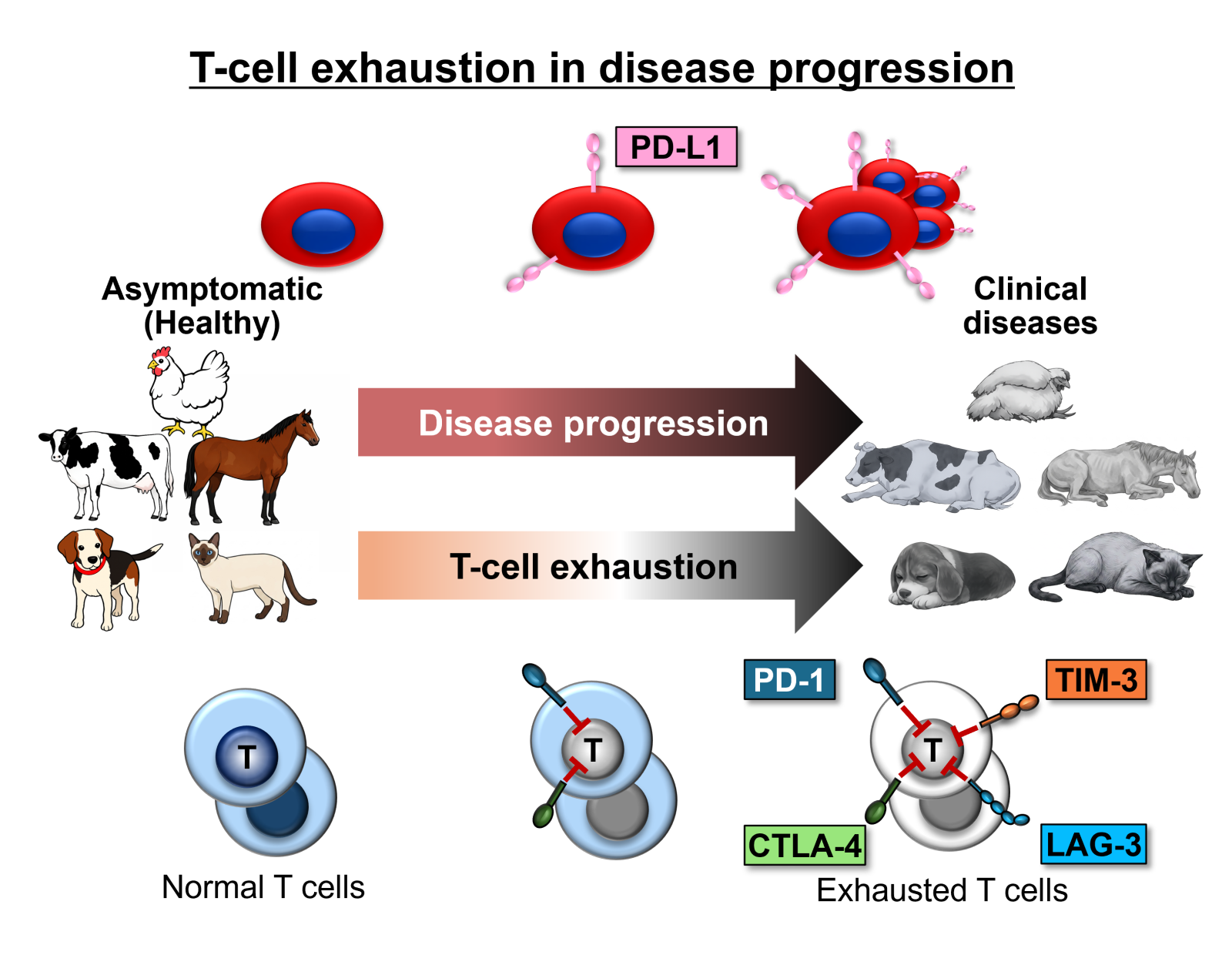
In our laboratory, we aim to develop novel preventive or therapeutic methods for chronic and intractable diseases in animals, that are closely related to human societies, such as cattle, chickens, dogs, cats, and horses, by investigating the mechanisms of immune exhaustion mediated by immune checkpoint molecules and the therapeutic effects of immune checkpoint inhibitors (ICIs).
We are analyzing the expressions of PD-1/PD-L1, as well as other immune checkpoint molecules (such as CTLA-4, TIM-3, and LAG-3), and their association with disease progression in bovine leukemia virus infection as a model disease. We are also developing novel control methods using blocking antibodies against these molecules (anti-PD-1, anti-PD-L1, anti-CTLA-4, anti-TIM-3, and anti-LAG-3 antibodies). Furthermore, studies are extended to Johne's disease, anaplasmosis, and mycoplasma infections in cattle, as well as Marek's disease in chickens.
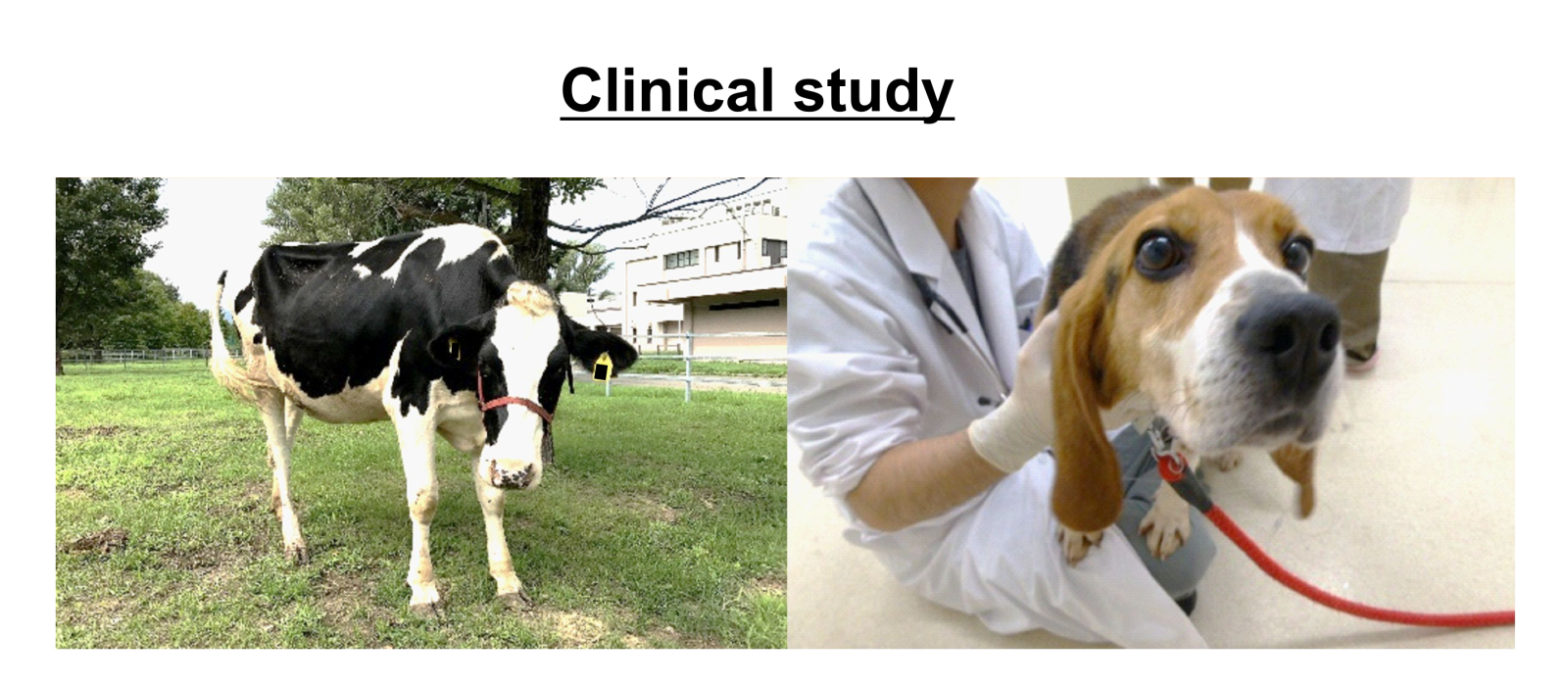
In dogs, cats, and horses, we are investigating the association between the expression of immune checkpoint molecules and pathogenesis or prognosis of spontaneous tumors. In particular, we are conducting clinical studies using anti-PD-L1 and anti-CTLA-4 antibodies for canine malignancies including malignant melanoma to evaluate their therapeutic efficacy and safety.

Research Press Release
June 23, 2023
Combination therapy effective against canine melanoma
April 22, 2021
New therapy target for malignant melanomas in dogs
August 7, 2019
The drug combination effective against bovine leukemia
April 2, 2018
Unraveling the immunopathogenesis of Johne’s disease
August 25, 2017
New therapeutic antibody for dog cancers
June 7, 2017
Overcoming immune suppression to fight against bovine leukemia