
Probiotics
A wide range of antimicrobial agents has been used for the prevention and treatment of infectious diseases; however, the emergence of antimicrobial‑resistant bacteria due to excessive antibiotic use has become a global concern. This has created an urgent need for novel control strategies that can serve as alternatives to antibiotic‑based approaches.
Probiotics—live microorganisms that confer health benefits to humans and animals when administered in adequate amounts—include well‑known groups such as lactic acid bacteria and butyrate acid bacteria. Although various probiotics are used as dietary supplements for both humans and livestock, including calves, there is still limited experimental evidence demonstrating their efficacy and underlying mechanisms in animals. To address this gap, our laboratory aims to develop new preventive and therapeutic strategies for animal infectious diseases by elucidating the immunomodulatory effects of probiotics in animals.
Our research on probiotics began in 2021 and is still in its early stages. We have demonstrated that fermented milk replacer alleviates clinical symptoms of calf diarrhea and that probiotic administration enhances vaccine responses in calves in large‑scale clinical study. In addition, we are evaluating multiple probiotic strains across various animal diseases to explore their broader potential as novel biological control agents.
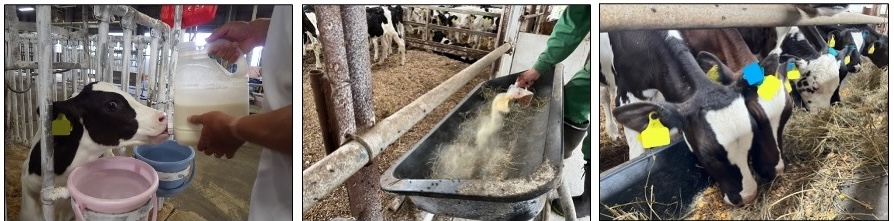
Feeding probiotics-supplemented feed to calves
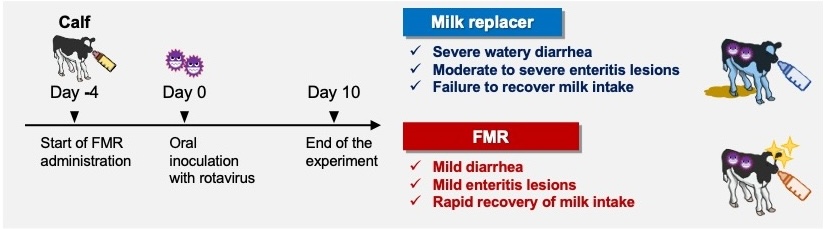
Effects of fermented milk replacer (FMR) in a calf diarrhea model induced by rotavirus infection
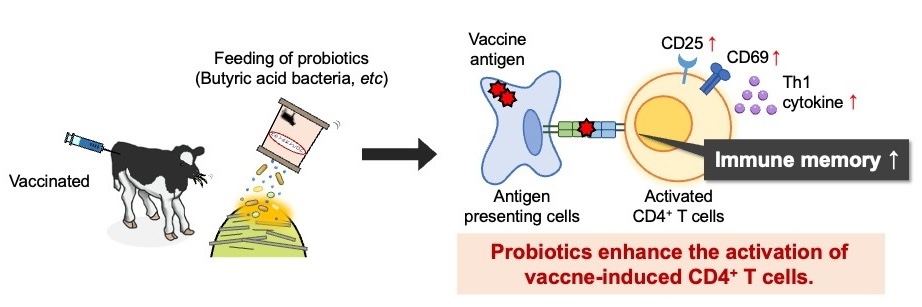
Enhancement of vaccine responses by probiotics
Research Press Release
April 2, 2021
Probiotics keep calves healthy, too!